



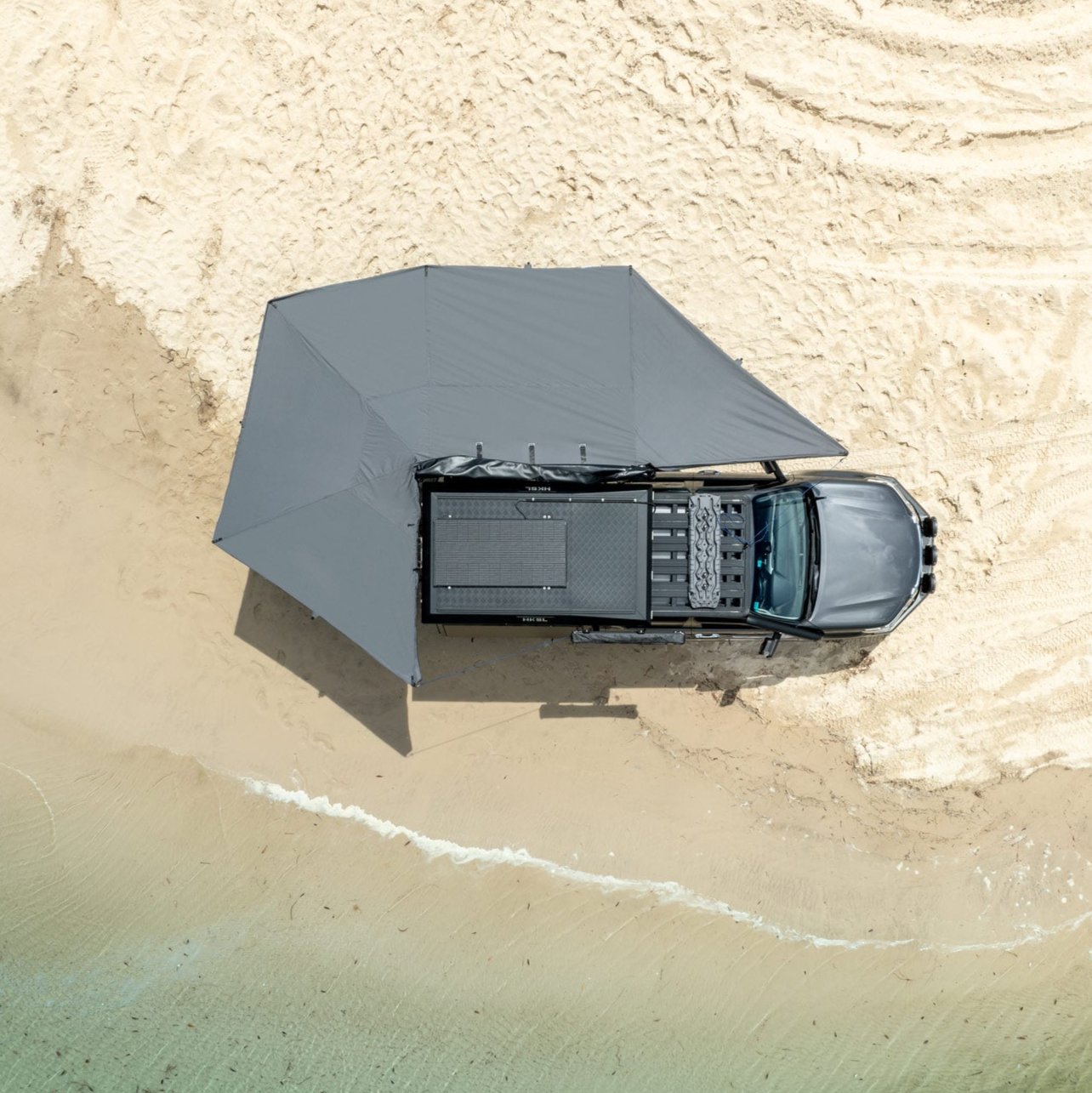

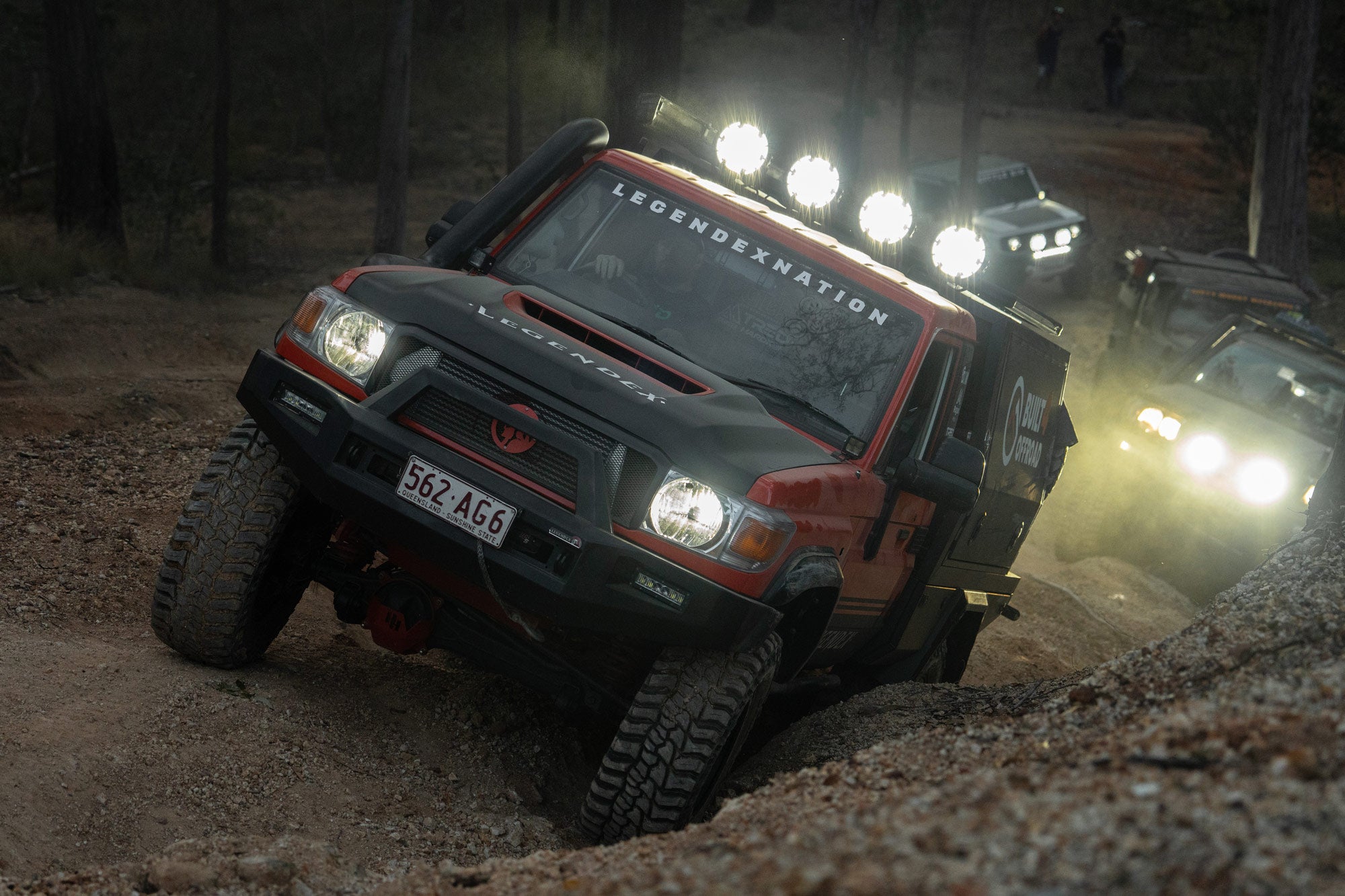



Getting bogged is part of the adventure. Staying bogged doesn’t have to be.
Whether you’re dropping tyre pressures for a weekend on the beach, tackling muddy tracks after a bit of rain, or heading deep into the bush, carrying the right recovery equipment can turn a potentially serious situation into a manageable inconvenience.
But not every recovery is the same. A 4WD buried to its chassis in soft sand requires a very different approach to a vehicle stuck halfway up a steep, slippery track.
That’s why we’ve put together two purpose-built recovery kits: the Beach Recovery Essentials Kit and the Winch Recovery Essentials Kit.
Both are designed around common 4WD recovery situations, but they use two very different methods to get you moving again. Here’s how they compare and which one is right for the type of driving you do.
The Main Difference: Kinetic Recovery vs Winch Recovery
The easiest way to choose between the two kits is to understand the type of recovery each one is designed for.
The Beach Recovery Essentials Kit is built primarily around kinetic recovery, where a second vehicle helps pull a bogged vehicle free.
The Winch Recovery Essentials Kit is designed around winch recovery, allowing a winch-equipped vehicle to recover itself using a suitable anchor point.
Neither method is necessarily better than the other. They solve different problems.
Beach Recovery Essentials Kit: Ideal for Sand and Bogged Vehicles
If most of your off-road adventures involve beaches, dunes, sand tracks and similar terrain, the Beach Recovery Essentials Kit is likely the better starting point.
At the centre of the kit is a 9m kinetic recovery rope.
Unlike a static rope, a kinetic rope is designed to stretch under load. Hardkorr's kinetic recovery ropes offer approximately 30% elongation, compared with around 20% for traditional recovery straps. This allows the rope to progressively store energy before transferring it to the bogged vehicle, creating a smoother and more gradual application of force.
This makes kinetic recovery particularly useful when a vehicle has become bogged in soft sand or mud and needs some assistance to regain momentum.
What's in the Beach Recovery Essentials Kit?
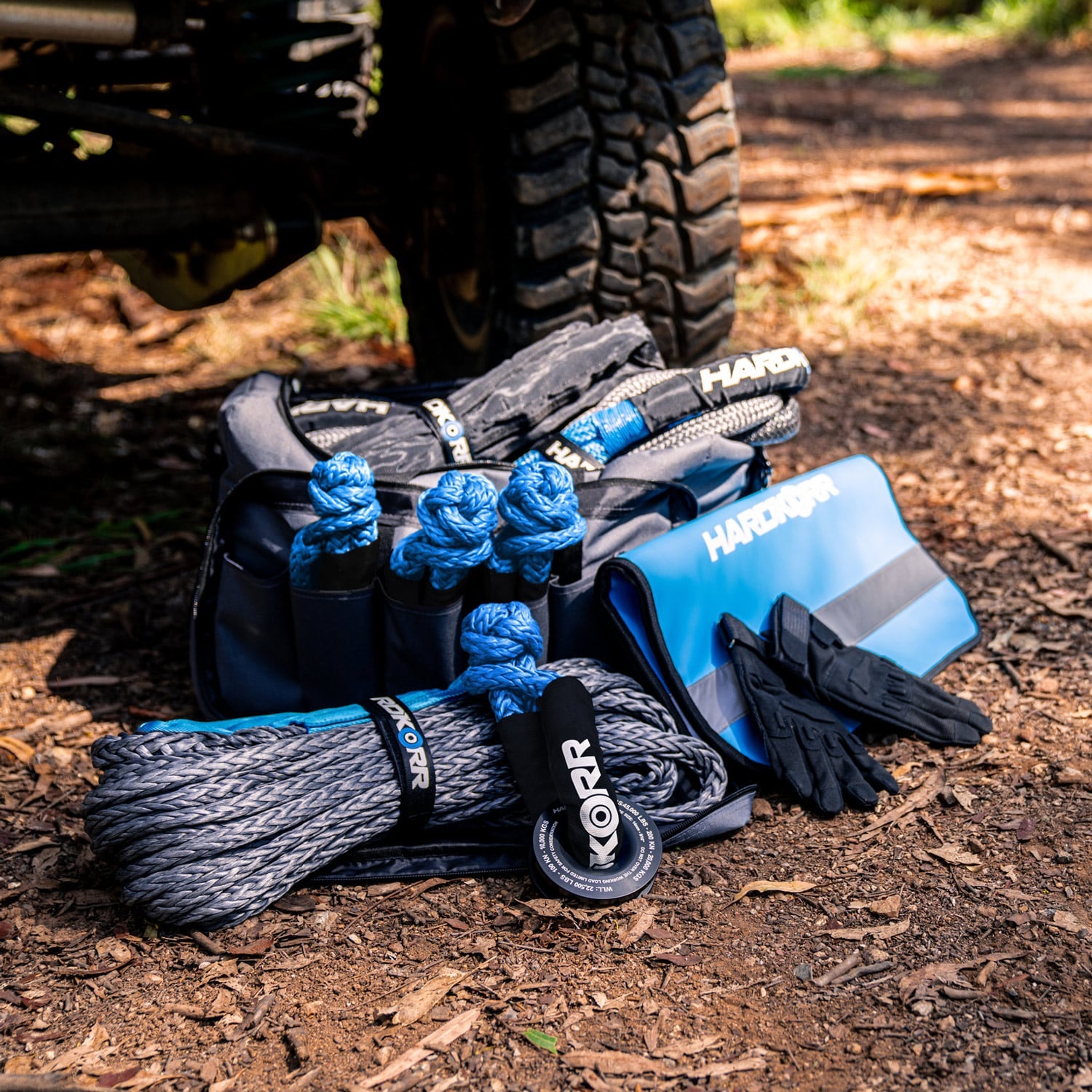
The kit contains:
-
1x 9m Kinetic Recovery Rope
-
2x Heavy Duty Soft Shackles
-
1x Recovery Hitch
-
1x Set of Recovery Gloves
-
1x Rope Dampener Bag Combo
-
Recovery guide
The 9m kinetic rope has a minimum breaking strength of 12,000kg, while each heavy-duty soft shackle has a minimum breaking strength of 14,000kg. The included recovery hitch provides a properly designed connection point for a compatible 50mm tow hitch receiver.
How Does a Kinetic Recovery Work?

Imagine you've driven onto a beach and hit a particularly soft patch. The tyres dig in, momentum disappears and suddenly you're sitting on the sand instead of driving over it.
Before reaching for the recovery gear, some preparation can make the recovery significantly easier. Clear sand away from the tyres and underneath the vehicle where possible, make sure there's a clear path out, and position the recovery vehicle on firmer ground ahead of the bogged vehicle.
A kinetic rope is then connected between rated recovery points on the vehicles using suitable recovery equipment.
The pulling vehicle moves forward and the kinetic rope progressively stretches. That stored energy helps provide a smoother pull to assist the bogged vehicle out of the soft terrain.
Hardkorr's recovery guide recommends gently accelerating both vehicles and maintaining speed during the recovery, rather than treating the recovery like a full-speed run-up.
The Beach Kit is best suited to:

Beach driving, sand tracks, dunes and many mud recoveries where another capable vehicle is available to assist.
It's also a great option for groups travelling together. If you're heading up the beach with a few mates and someone inevitably finds the extra-soft bit of sand, a kinetic recovery setup provides a relatively simple way to get moving again.
There is one important limitation though: you generally need another vehicle.
If you're travelling solo or tackling terrain where another vehicle can't safely get into position, that's where a winch becomes much more useful.
Winch Recovery Essentials Kit: Built for Tougher Tracks and Self-Recovery

If your adventures take you onto steep, muddy, rocky or heavily rutted tracks, the Winch Recovery Essentials Kit may be the better choice, assuming your vehicle is already fitted with a suitable winch.
Rather than relying on another vehicle to provide the pulling force, a winch recovery uses your vehicle's winch and a suitable anchor point to progressively pull the vehicle toward safety.
That makes winching particularly valuable when travelling solo.
What's in the Winch Recovery Essentials Kit?
The kit contains:
-
1x 3m Static Utility Rope
-
1x 20m Winch Extension Rope
-
3x Heavy Duty Soft Shackles
-
1x Recovery Ring
-
1x Set of Recovery Gloves
-
1x Rope Dampener
-
1x Heavy Duty Carry Bag
-
Recovery guide
The included 20m extension rope gives you significantly more flexibility when the nearest suitable anchor point is beyond the reach of your winch rope. The recovery ring can also be used to redirect the winch line or create a double-line pull.
Why Use a Recovery Ring?
A recovery ring is one of the most useful pieces of equipment in a winch recovery setup.
Used with suitable soft recovery gear, it allows the winch rope to change direction or return toward the vehicle to create a mechanical advantage. The ring is typically attached to an anchor using a soft shackle, with the winch rope running through the groove around the ring.
This allows you to set up a double-line winch recovery.
A double-line pull can be particularly useful when the vehicle is heavily bogged or when more pulling force is required to safely move the vehicle.
The Hardkorr recovery guide outlines a setup using the static utility rope around a suitable tree, connected to the recovery ring with a soft shackle. The winch rope passes around the recovery ring and returns to a rated recovery point on the vehicle. The included extension rope can provide additional reach when required.
What Is the Static Utility Rope For?
One important difference between the two kits is the inclusion of a 3m static utility rope in the Winch Recovery Essentials Kit.
Unlike a kinetic rope, a static rope is specifically designed not to stretch significantly under load.
That makes it suitable for applications where maintaining a consistent length is important, such as creating a bridle to equalise pulling forces. Its substantial thickness also allows it to be used as a tree protector when setting up an appropriate winch recovery.
A kinetic rope and static rope therefore aren't interchangeable. They're designed to perform very different jobs.
Beach Recovery Kit vs Winch Recovery Kit
| Beach Recovery Essentials Kit | Winch Recovery Essentials Kit | |
|---|---|---|
| Primary recovery method | Kinetic recovery | Winch recovery |
| Best suited to | Beaches, sand, dunes and bogs | Bush tracks, mud, hills and difficult terrain |
| Requires another vehicle | Yes | No |
| Requires a winch | No | Yes |
| Main recovery rope | 9m kinetic rope | 20m winch extension rope |
| Static utility rope | No | Yes, 3m |
| Soft shackles | 2 | 3 |
| Recovery ring | No | Yes |
| Recovery hitch | Yes | No |
| Rope dampener | Yes | Yes |
| Recovery gloves | Yes | Yes |
| Best for solo touring | No, Unless in highly populated area. | Yes, with a suitable winch and anchor |
| Best for beach trips with mates | Yes | Useful, but often more equipment than required for a simple sand recovery |
So, Which Recovery Kit Should You Buy?
If you're primarily doing beach driving, sand tracks and weekend trips with other vehicles, start with the Beach Recovery Essentials Kit.
It gives you the core equipment required for a kinetic recovery without filling your vehicle with equipment you're unlikely to use.
If you're regularly tackling remote tracks, steep terrain, deep mud or travelling solo, and your 4WD has a winch fitted, the Winch Recovery Essentials Kit gives you considerably more flexibility.
But there's another answer too.
What if you do both?
If you're serious about 4WD touring, the two recovery methods complement each other rather than compete with each other.
A kinetic recovery can be quick and effective when another vehicle is available and conditions allow it. A winch gives you another option when there isn't another vehicle around, when positioning a recovery vehicle isn't practical, or when a slow and controlled recovery is required.
Carrying equipment for both methods gives you far more options when the terrain doesn't go according to plan.
Before You Get Stuck
Recovery equipment is only useful if you know how to use it.
Before heading off-road, familiarise yourself with your vehicle's rated recovery points, understand the ratings of your recovery equipment and inspect your gear for wear or damage.
Never use a towball, tie-down point or other unsuitable vehicle fitting as a recovery point. Hardkorr's recovery guide specifically warns that recovery equipment should only be attached to an approved, suitably rated recovery point or device.
During a recovery, passengers and bystanders should remain well away from the recovery area, communication between drivers should be clear, and the intended exit path should be planned before applying load.
Most importantly, don't wait until you're axle-deep in sand with no phone reception to figure out how your recovery gear works.
Learn the equipment, understand your vehicle and practise setting everything up somewhere safe before you need it for real.
Because getting stuck might be part of four-wheel driving.
Getting home is the important bit.